Most cleaning routines fail not because people are lazy, but because the routines were designed for someone with more time and energy than the average person actually has. The typical advice — vacuum every room twice a week, scrub the bathroom daily, mop every floor in one sitting — is exhausting to read, let alone follow. It sets an unrealistic baseline, and when life gets busy, the whole thing collapses.
The goal of a good cleaning routine isn't perfection. It's maintaining a home that feels comfortable and reasonably clean without making cleaning the central activity of your week. That's a completely achievable standard, and this guide walks through how to get there.
Start With an Honest Assessment
Before you write a single task on a list, spend ten minutes walking through your home and noticing what actually bothers you. Not what feels like it should bother you — what actually makes you feel uncomfortable when you notice it.
For most people, it's a short list: a cluttered counter, a dirty bathroom sink, floors that haven't been swept in a while. These are the things worth addressing consistently. Everything else can be done less frequently without materially affecting how your home feels.
Write these observations down. They're the foundation of your routine — the things that get done every week no matter what. Everything else is secondary.
The Daily Minimum
A sustainable routine has three tiers: daily, weekly, and occasional. Daily tasks should take no more than 10–15 minutes. If your "daily" list takes an hour, it's not a daily list — it's wishful thinking.
Here's a realistic daily minimum that keeps a home from deteriorating:
- Wipe down kitchen counters after cooking
- Put away items that have drifted to the wrong room
- Quick swipe of the bathroom sink and faucet with a cloth
- Empty visible trash if full
That's genuinely it. These four things — done consistently — prevent 80% of the situations that make cleaning feel overwhelming. A cluttered home with a clean sink and empty counters feels dramatically different from one where nothing has been touched in a week.
"The point isn't to clean everything every day. The point is to prevent the slow accumulation of mess that makes the once-a-week clean feel like a project."
The Weekly Clean
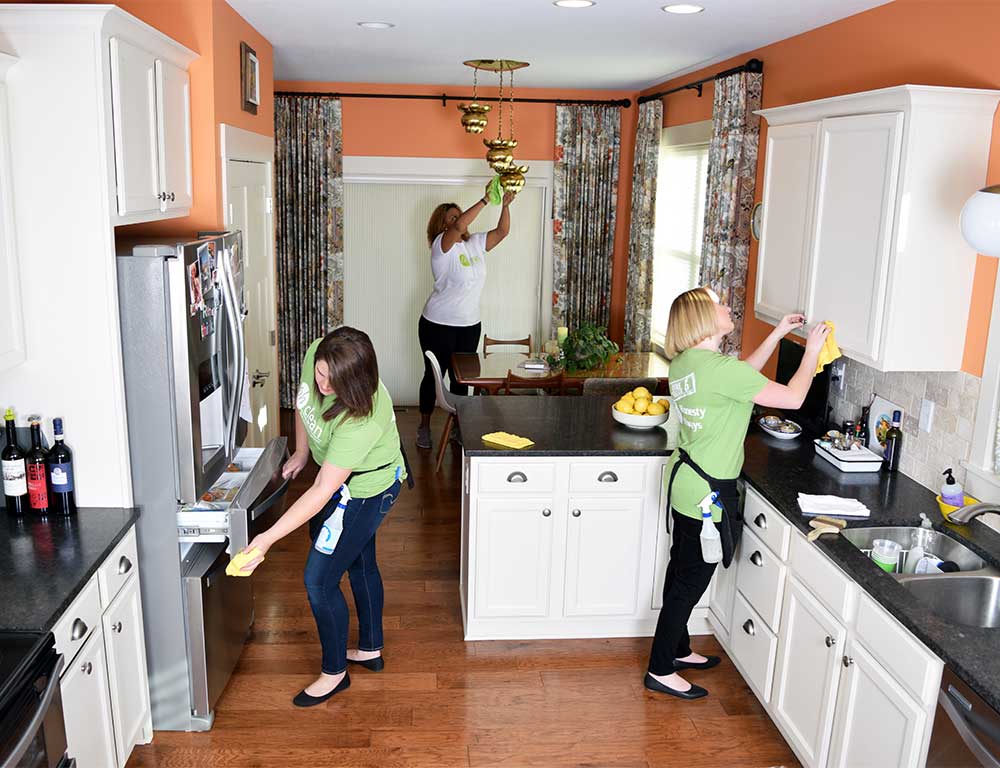
Once a week, set aside 60–90 minutes for a full-home clean. This isn't a deep clean — it's a maintenance clean. The goal is to hit every area at a surface level so nothing is getting neglected. Here's a practical room-by-room breakdown:
Kitchen (20–25 minutes)
The kitchen accumulates grease, crumbs, and food residue faster than anywhere else. Focus on the stove top and burners, the counters, the sink, and the floor in front of the stove and sink. The inside of the fridge and oven don't need weekly attention — monthly is fine for most households.
- Wipe all counters thoroughly, including behind the coffee maker and toaster
- Clean the stovetop and wipe down appliance fronts
- Scrub the sink and dry it to prevent water stains
- Sweep and mop the floor
- Empty the trash and wipe the bin if needed
Bathroom (15–20 minutes)
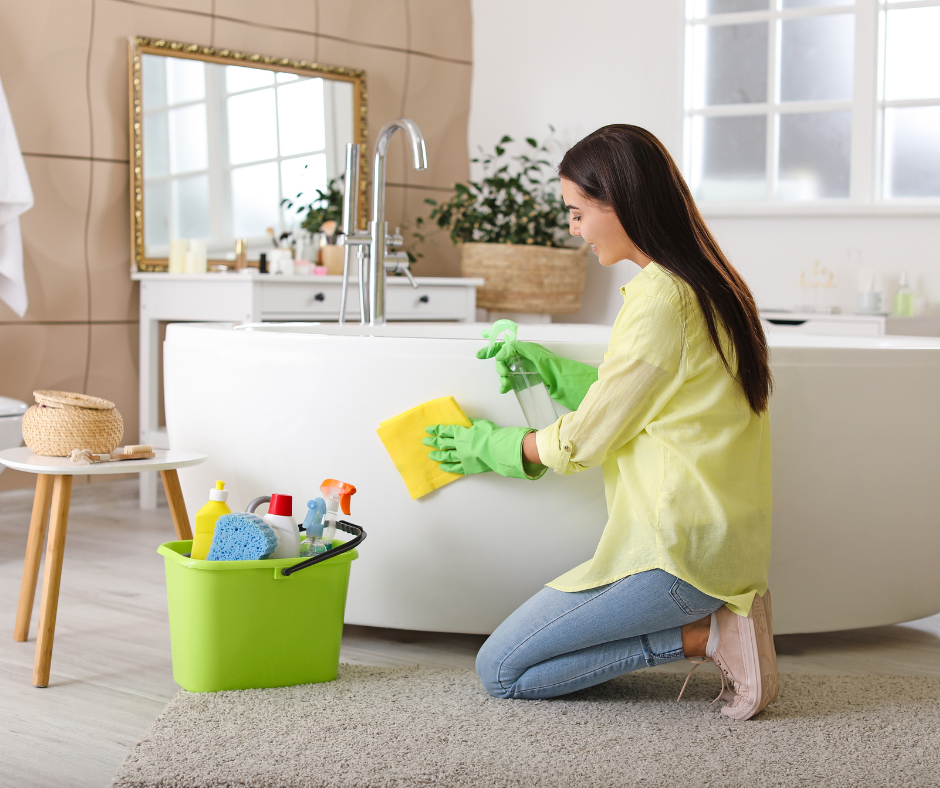
Bathrooms need more frequent attention than most other rooms because moisture and daily use create buildup quickly. A weekly bathroom clean isn't thorough — it's preventing the buildup that makes deep cleaning so unpleasant when you finally get to it.
- Spray and wipe the toilet inside and out, including the base and behind the seat
- Clean the sink and wipe the counter and mirror
- Spray the shower or tub and wipe down tiles and fixtures
- Sweep and mop the floor
Living Areas (15 minutes)
Dust collects on surfaces quickly, especially in homes with pets. A quick pass with a microfibre cloth over all furniture and electronics takes far less time than most people think.
- Dust all horizontal surfaces — shelves, tables, electronics
- Straighten cushions and throws
- Vacuum or sweep all floors
Bedrooms (10 minutes per room)
Bedrooms are usually the easiest rooms to maintain. Make the bed daily if possible — it changes how the room feels immediately — and do a weekly pass for dust and floors.
- Make the bed and straighten any linens
- Dust surfaces and the tops of furniture
- Vacuum or sweep the floor, including under the bed if accessible
The Occasional Tasks
Some things genuinely don't need to happen weekly. Adding them to a weekly list makes the whole system feel heavier than it needs to be. These tasks belong on a monthly or quarterly schedule:
- Inside oven and fridge: Monthly, or when visibly needed
- Baseboards: Monthly
- Windows: Quarterly, or twice a year
- Behind large appliances: Every few months
- Ceiling fans and light fixtures: Monthly
- Grout scrubbing: Quarterly
- Deep mattress and upholstery clean: Seasonally
Keeping these on a separate list — not your weekly routine — means your weekly routine stays manageable. When the time comes, you do them as a separate, focused task rather than feeling like you've been neglecting your home.
Where Professional Cleaning Fits In
A consistent personal routine and occasional professional cleaning aren't mutually exclusive — they complement each other well. A professional clean every month or two handles everything that a routine naturally skips: grout, baseboards, behind appliances, thorough bathroom scrubbing.
The result is a home that feels consistently well-maintained because the daily and weekly tasks are handled by you, and the deeper work that requires more time and specialized attention is handled by a professional team on a longer cycle.
If you find that your weekly clean is consistently revealing areas that are getting away from you — bathroom tiles that are staining despite regular wiping, kitchen grout darkening, floors dulling over time — that's usually the signal that a professional deep clean would reset things and make your personal routine more effective going forward.
One Practical Tip That Makes Everything Easier
Keep cleaning supplies accessible in the rooms where you use them. A bathroom cleaner under the bathroom sink, a microfibre cloth on the kitchen counter, a small vacuum near the living room. The friction of having to retrieve supplies from a central closet is genuinely a barrier to doing quick touch-ups.
This one change — distributing supplies to where they're needed — tends to increase the frequency of those quick 5-minute cleans that keep a room from deteriorating between weekly sessions. It sounds small, but it makes a real difference in practice.
A Final Word on Realistic Expectations
A clean home doesn't mean a spotless home. It means a home that feels comfortable, isn't causing you stress when you look around, and can be ready for guests with an hour's notice. That's a reasonable target, and the routine above — daily minimum, weekly maintenance, occasional deeper work — is what gets most homes there without cleaning dominating your time.
The weeks when you only manage the daily minimum are still better than the weeks where nothing happens. Progress is accumulative, and a routine that holds up 80% of the time is far more valuable than a perfect routine that gets abandoned after two weeks.